English has a reputation for taking words from everywhere. Dictionary data tells a more precise story: a few big waves of borrowing, mostly from French and Latin, that reshaped the words we use most often.
Pick a period to see how much of its new vocabulary came from other languages. The bar shows the share of new words that were borrowed.
Based on OED-derived figures quoted by Philip Durkin (2017) and the Wordorigins analysis of OED etymologies (2014).
TWO NUMBERS WORTH KNOWING
Borrowing shaped the words we use most.
One figure on everyday vocabulary, one on the size of the French wave.
50%+
Top 1,000 words borrowed or built from borrowings
Of the 1,000 most frequent words in a large corpus, just over half were borrowed or built from borrowed words. Over 90% of those came from French, Latin or both.
EVERYDAY WORDS · BNC
10,000+ words
French borrowings in Middle English
Well over 10,000 words recorded by the OED were borrowed from French during the Middle English period, mainly from the French used in the British Isles.
THE FRENCH WAVE · OED
The British National Corpus holds 100 million words of late 20th-century British English. In it, 220 of the 1,000 most frequent words are of French origin and 209 owe something to both French and Latin.
FOUR WAYS TO SPOT A BORROWING
Read the past in everyday words.
You can see the history of borrowing in ordinary English without a dictionary to hand. These patterns come straight from the research.
Start with the A words
Able, account, age, agree, air, amount, announce, apply, army, art, avoid and award all came from French, Durkin notes.
Look for official language
English took over legal, parliamentary and business roles from French and Latin in the 1300s and 1400s, bringing their words with it.
Notice the science words
Latin peaked as a source in the 1600s, and Greek begins to appear then, often in technical and scientific vocabulary.
Check the date
Most high-frequency borrowings arrived before 1500. Later loans rarely reached the core of everyday English.
AI-generated image, not a photograph of a real person or place.AI-generated image, not a photograph of a real person or place.
THE FRENCH OF ENGLAND
Not just Norman, and not just nobles.
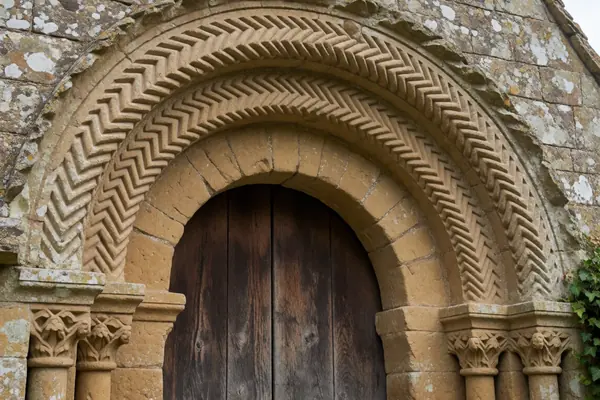
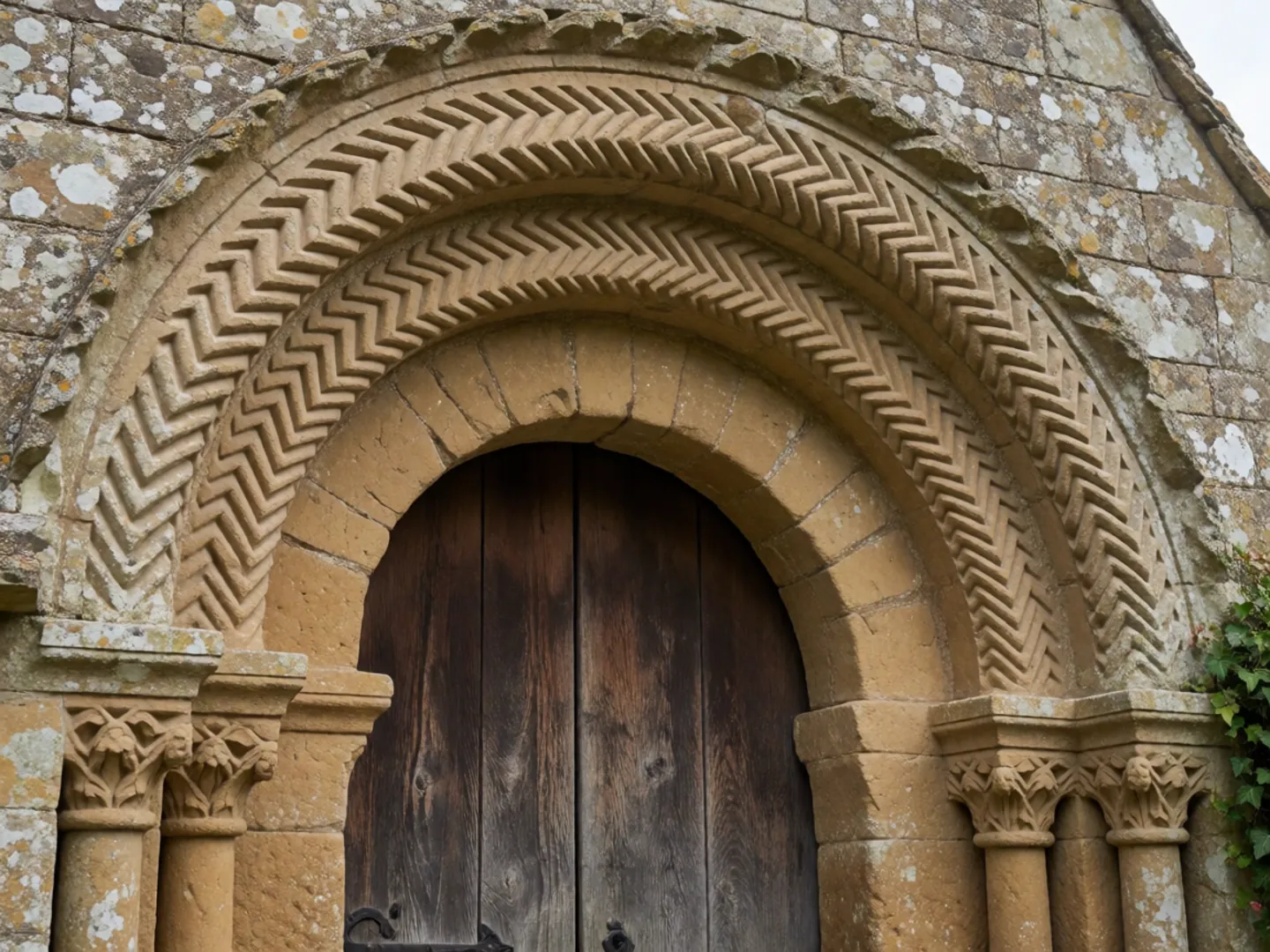
Anglo-Norman is the name usually given to the French used in Britain from 1066 to the middle of the fifteenth century. The lexicographer William Rothwell argued 'Anglo-French' fits better, since William's army came from many regions of France.
Over three centuries the language was used by all kinds of people, from native speakers to beginners. Records of law French still underpin the basic vocabulary of present-day English law, Rothwell wrote.
Questions
Questions people ask
Does English borrow more words than it makes?
No. An analysis of OED etymologies found four times as many English words come from English roots as from Latin, the next largest source, and over 70% of 20th-century new words used English roots.
When did English borrow most from French?
Durkin says the rate peaked in the decades either side of 1400, when French made up over 40% of new words in the mid to late 1300s.
How many Viking words are in English?
The Wordorigins analysis of OED data found only about 1% of English words come from Old Norse roots, though about 10% of new words in the twelfth century did.
Are common words more likely to be borrowed?
Just over half of the 1,000 most frequent words in a large English corpus were borrowed or built from borrowings, mostly from French and Latin, and nearly all arrived before 1500.
What was Anglo-Norman?
The French used in Britain between 1066 and the middle of the fifteenth century. The Anglo-Norman Dictionary records it, and some scholars prefer the term Anglo-French.